My Career Grow Method For 2026
The Problem I Was Facing
As an early-career engineer with 2.5 years of experience, I felt overwhelmed by the sheer number of subjects demanding my attention. AI? Software Engineering? Data Engineering? System Design? DSA? I felt lost and lacked a clear direction to achieve my goals efficiently and with quality.
I also struggled with integrating AI tools into my workflow. How much should I delegate to AI, and how much should I do myself? After watching some insightful videos from seasoned engineers in late February 2026, I finally reached a conclusion. This post outlines my new strategy.
References for Further Context
- NeuralNine: I Started A Coding Habit & You Should Too…
What Was I Doing Wrong?
-
Lack of Completion: I would start new certifications without finishing the previous ones.
-
The “Deep Dive” Trap: I tried to learn complex topics as fast as possible, only to end up frustrated because deep comprehension takes time.
-
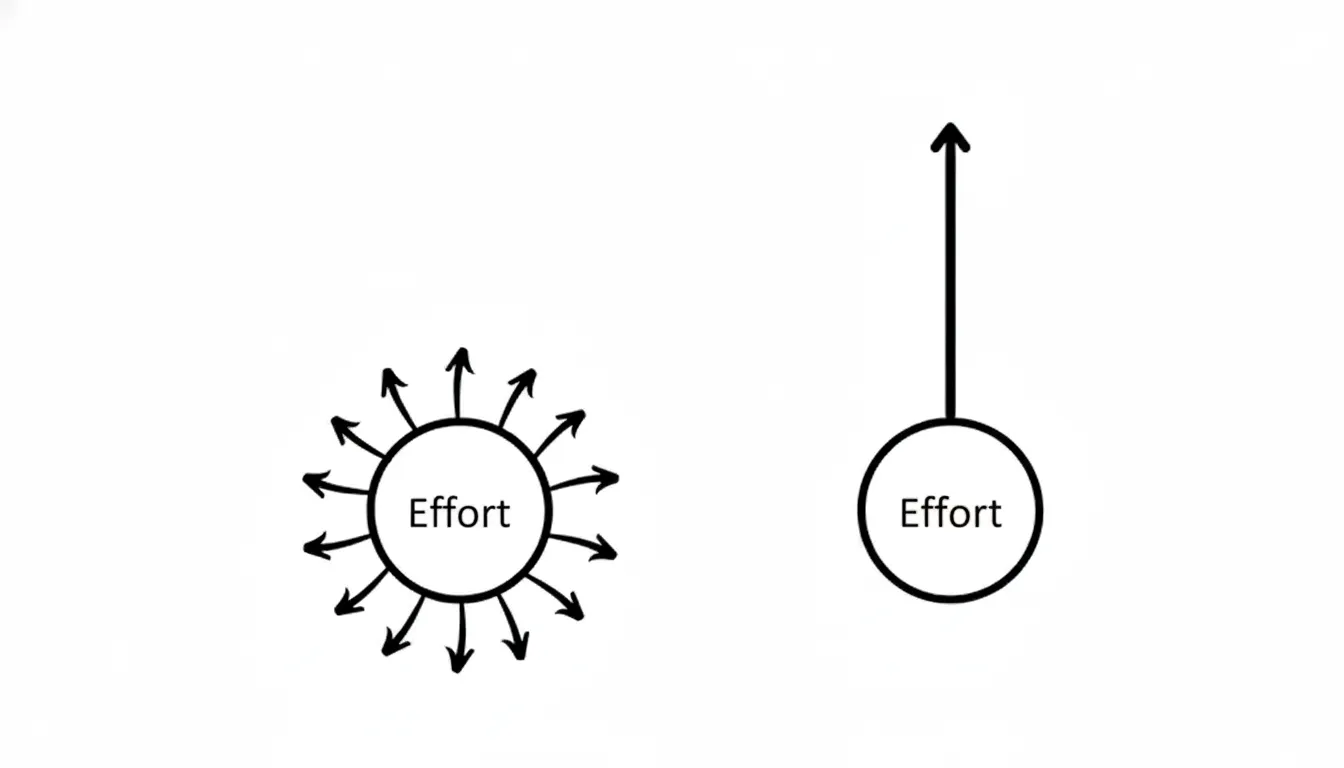
The “First Circle” Effect: I felt like I was shooting in multiple directions at once like the right circle, resulting in zero net progression.
-
“Vibe Coding” Dependency: I was treating AI like a commodity rather than a tool. By passing business rules to an LLM and letting it implement everything, I wasn’t actually learning. It felt like I was just handing off problems to a better engineer instead of growing myself.
In summary, the key points I needed to address this year were:
-
Stop trying to learn everything at once.
-
Take full ownership of the code in my projects.
-
Focus on shipping: Real knowledge is gained in production.
My 2026 Growth Plan
Inspired by NeuralNine’s framework on building a daily coding habit, I have developed my own weekly routine. I encourage you to analyze your current situation and find ways to optimize your own knowledge gains.
My Weekly Routine:
-
Daily Consistency: Push at least one commit to a personal project every day.
-
Project-Based Learning: Start and finish one small personal project every week.
-
Structured Education: Pursue one certification at a time (currently: Data Engineering by DeepLearning.AI via Coursera) and finish it within four months.
-
Documentation: Document everything I learn in a weekly blog post—starting with this one.
-
AI as an Engineering Manager: Use AI to help brainstorm solutions, debate trade-offs, and compare architectures, rather than just writing the code for me.
My Framework in Practice:
-
Idea Phase: Use Gemini (Engineering Manager mode) to scratch out ideas, find possible solutions, and debate trade-offs.
-
Architecture Phase: Use Gemini (Software Engineer mode) to understand implementation details and—most importantly—understand the solution line-by-line.
-
Execution Phase: Code the project manually. If I get stuck, use an IDE assistant to help debug while I focus on understanding the “why” behind the fix.